
by 3PB Team
Share
by 3PB Team
Share

Radio Frequency Identification technology powers countless applications, like, inventory tracking and supply chain management to smart access control and healthcare logistics. While often considered a simple “tag and reader” system, RFID design involves complex electromagnetic interactions. A critical and often overlooked tool in optimizing these systems is the radio frequency absorber.
RF absorbers are becoming increasingly important in RFID systems to reduce interference, improve tag readability, and enable reliable operation in electromagnetically complex environments.

How RF Absorbers Improve RFID Tag Performance
1. Mitigating Detuning Near Metal or Liquids
One of the most common challenges in RFID deployments is tag detuning when mounted on or near metal or liquids. These materials reflect and absorb RF energy, shifting the tag’s resonance frequency and reducing efficiency.
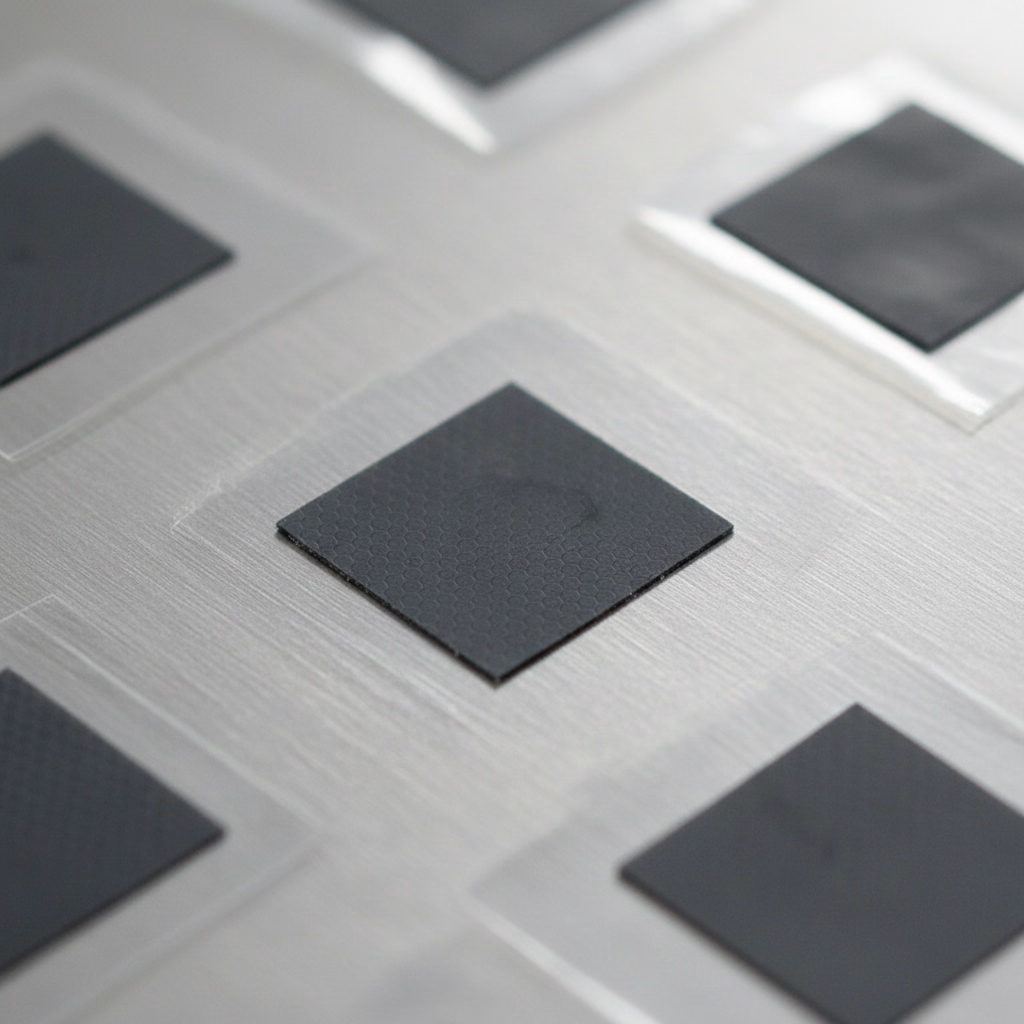
Solution: Thin RF absorber pads can be placed between the tag and the interfering surface. These pads absorb and dissipate reflected RF energy, preventing it from coupling back into the antenna and causing detuning.
2. Improving Read Accuracy in Dense Tag Environments
In scenarios where many RFID tags are deployed close together (such as in retail, warehouses, or libraries), cross-tag interference and multipath reflections can occur. This can confuse readers or prevent some tags from being read.
Solution: Absorbers integrated around tag antennas or within product packaging can suppress unwanted reflections and reduce inter-tag interference, improving overall system clarity and read reliability.
3. Enabling RFID Tag Mounting on Challenging Surfaces
For RFID to work on metal tools, electronics, or curved structures specialized on metal tags are often used. These tags typically include RF absorbers or shielding layers as part of their construction.
Solution: Custom designed RF absorber backings allow standard RFID antennas to perform reliably when mounted directly on metal or carbon fiber surfaces, expanding deployment flexibility.
4. Enhancing Privacy and Security
In some applications, especially involving personal identification or sensitive logistics, there is a need to control or limit RFID tag read range to prevent unauthorized scanning.
Solution: RF absorber films or shields can be embedded in product packaging or ID holders to attenuate signals when privacy is needed, only allowing tag access when intentionally exposed to a reader.
Final Thoughts
RF absorbers are becoming indispensable components in advanced RFID systems. By controlling unwanted reflections, preventing detuning, and improving isolation, these materials significantly enhance read reliability, system performance, and application flexibility.
Whether you’re deploying tags on metal assets, tracking medical supplies, or managing privacy concerns, RF absorbers offer a powerful way to unlock RFID’s full potential in real-world environments.
Radio Frequency Identification technology powers countless applications, like, inventory tracking and supply chain management to smart access control and healthcare logistics. While often considered a simple “tag and reader” system, RFID design involves complex electromagnetic interactions. A critical and often overlooked tool in optimizing these systems is the radio frequency absorber.
RF absorbers are becoming increasingly important in RFID systems to reduce interference, improve tag readability, and enable reliable operation in electromagnetically complex environments.
How RF Absorbers Improve RFID Tag Performance
1. Mitigating Detuning Near Metal or Liquids
One of the most common challenges in RFID deployments is tag detuning when mounted on or near metal or liquids. These materials reflect and absorb RF energy, shifting the tag’s resonance frequency and reducing efficiency.
Solution: Thin RF absorber pads can be placed between the tag and the interfering surface. These pads absorb and dissipate reflected RF energy, preventing it from coupling back into the antenna and causing detuning.
2. Improving Read Accuracy in Dense Tag Environments/h4>
In scenarios where many RFID tags are deployed close together (such as in retail, warehouses, or libraries), cross-tag interference and multipath reflections can occur. This can confuse readers or prevent some tags from being read.
Solution: Absorbers integrated around tag antennas or within product packaging can suppress unwanted reflections and reduce inter-tag interference, improving overall system clarity and read reliability.
3. Enabling RFID Tag Mounting on Challenging Surfaces
For RFID to work on metal tools, electronics, or curved structures (like pipelines), specialized on-metal tags are often used. These tags typically include RF absorbers or shielding layers as part of their construction.
Solution: Custom-designed RF absorber backings allow standard RFID antennas to perform reliably when mounted directly on metal or carbon fiber surfaces, expanding deployment flexibility.
4. Enhancing Privacy and Security
In some applications, especially involving personal identification or sensitive logistics, there is a need to control or limit RFID tag read range to prevent unauthorized scanning.
Solution: RF absorber films or shields can be embedded in product packaging or ID holders to attenuate signals when privacy is needed, only allowing tag access when intentionally exposed to a reader.
Final Thoughts
RF absorbers are becoming indispensable components in advanced RFID systems. By controlling unwanted reflections, preventing detuning, and improving isolation, these materials significantly enhance read reliability, system performance, and application flexibility.
Whether you’re deploying tags on metal assets, tracking medical supplies, or managing privacy concerns, RF absorbers offer a powerful way to unlock RFID’s full potential in real-world environments.
Radio Frequency Identification technology powers countless applications, like, inventory tracking and supply chain management to smart access control and healthcare logistics. While often considered a simple “tag and reader” system, RFID design involves complex electromagnetic interactions. A critical and often overlooked tool in optimizing these systems is the radio frequency absorber.
RF absorbers are becoming increasingly important in RFID systems to reduce interference, improve tag readability, and enable reliable operation in electromagnetically complex environments.
How RF Absorbers Improve RFID Tag Performance
1. Mitigating Detuning Near Metal or Liquids
One of the most common challenges in RFID deployments is tag detuning when mounted on or near metal or liquids. These materials reflect and absorb RF energy, shifting the tag’s resonance frequency and reducing efficiency.
Solution: Thin RF absorber pads can be placed between the tag and the interfering surface. These pads absorb and dissipate reflected RF energy, preventing it from coupling back into the antenna and causing detuning.
2. Improving Read Accuracy in Dense Tag Environments
In scenarios where many RFID tags are deployed close together (such as in retail, warehouses, or libraries), cross-tag interference and multipath reflections can occur. This can confuse readers or prevent some tags from being read.
Solution: Absorbers integrated around tag antennas or within product packaging can suppress unwanted reflections and reduce inter-tag interference, improving overall system clarity and read reliability.
3. Enabling RFID Tag Mounting on Challenging Surfaces
For RFID to work on metal tools, electronics, or curved structures specialized on metal tags are often used. These tags typically include RF absorbers or shielding layers as part of their construction.
Solution: Custom designed RF absorber backings allow standard RFID antennas to perform reliably when mounted directly on metal or carbon fiber surfaces, expanding deployment flexibility.
4. Enhancing Privacy and Security
In some applications, especially involving personal identification or sensitive logistics, there is a need to control or limit RFID tag read range to prevent unauthorized scanning.
Solution: RF absorber films or shields can be embedded in product packaging or ID holders to attenuate signals when privacy is needed, only allowing tag access when intentionally exposed to a reader.
Final Thoughts
RF absorbers are becoming indispensable components in advanced RFID systems. By controlling unwanted reflections, preventing detuning, and improving isolation, these materials significantly enhance read reliability, system performance, and application flexibility.
Whether you’re deploying tags on metal assets, tracking medical supplies, or managing privacy concerns, RF absorbers offer a powerful way to unlock RFID’s full potential in real-world environments.
Radio Frequency Identification technology powers countless applications, like, inventory tracking and supply chain management to smart access control and healthcare logistics. While often considered a simple “tag and reader” system, RFID design involves complex electromagnetic interactions. A critical and often overlooked tool in optimizing these systems is the radio frequency absorber.
RF absorbers are becoming increasingly important in RFID systems to reduce interference, improve tag readability, and enable reliable operation in electromagnetically complex environments.
How RF Absorbers Improve RFID Tag Performance
1. Mitigating Detuning Near Metal or Liquids
One of the most common challenges in RFID deployments is tag detuning when mounted on or near metal or liquids. These materials reflect and absorb RF energy, shifting the tag’s resonance frequency and reducing efficiency.
Solution: Thin RF absorber pads can be placed between the tag and the interfering surface. These pads absorb and dissipate reflected RF energy, preventing it from coupling back into the antenna and causing detuning.
2. Improving Read Accuracy in Dense Tag Environments/h4>
In scenarios where many RFID tags are deployed close together (such as in retail, warehouses, or libraries), cross-tag interference and multipath reflections can occur. This can confuse readers or prevent some tags from being read.
Solution: Absorbers integrated around tag antennas or within product packaging can suppress unwanted reflections and reduce inter-tag interference, improving overall system clarity and read reliability.
3. Enabling RFID Tag Mounting on Challenging Surfaces
For RFID to work on metal tools, electronics, or curved structures (like pipelines), specialized on-metal tags are often used. These tags typically include RF absorbers or shielding layers as part of their construction.
Solution: Custom-designed RF absorber backings allow standard RFID antennas to perform reliably when mounted directly on metal or carbon fiber surfaces, expanding deployment flexibility.
4. Enhancing Privacy and Security
In some applications, especially involving personal identification or sensitive logistics, there is a need to control or limit RFID tag read range to prevent unauthorized scanning.
Solution: RF absorber films or shields can be embedded in product packaging or ID holders to attenuate signals when privacy is needed, only allowing tag access when intentionally exposed to a reader.
Final Thoughts
RF absorbers are becoming indispensable components in advanced RFID systems. By controlling unwanted reflections, preventing detuning, and improving isolation, these materials significantly enhance read reliability, system performance, and application flexibility.
Whether you’re deploying tags on metal assets, tracking medical supplies, or managing privacy concerns, RF absorbers offer a powerful way to unlock RFID’s full potential in real-world environments.
