
by 3PB Team
Share
by 3PB Team
Share

As robotics advances into nearly every aspect of industry and daily life, the need for robust and interference free operation is more important than ever. Behind the scenes, one unsung technology is helping keep robotic systems stable and efficient: Radio Frequency absorbers.
What Are RF Absorbers?
RF absorbers are materials designed to reduce electromagnetic radiation in the radio frequency spectrum. They work by absorbing unwanted electromagnetic energy and converting it into heat, which is safely dissipated. These materials prevent reflections, reduce interference, and improve electromagnetic compatibility (EMC) in complex electronic systems.
Why Robots Need RF Absorbers
Robots rely on a network of sensors, processors, actuators, and wireless modules, all of which emit or receive electromagnetic signals. Without careful electromagnetic management, these components can interfere with each other, leading to reduced performance or even system failure. RF absorbers are crucial for preventing this.
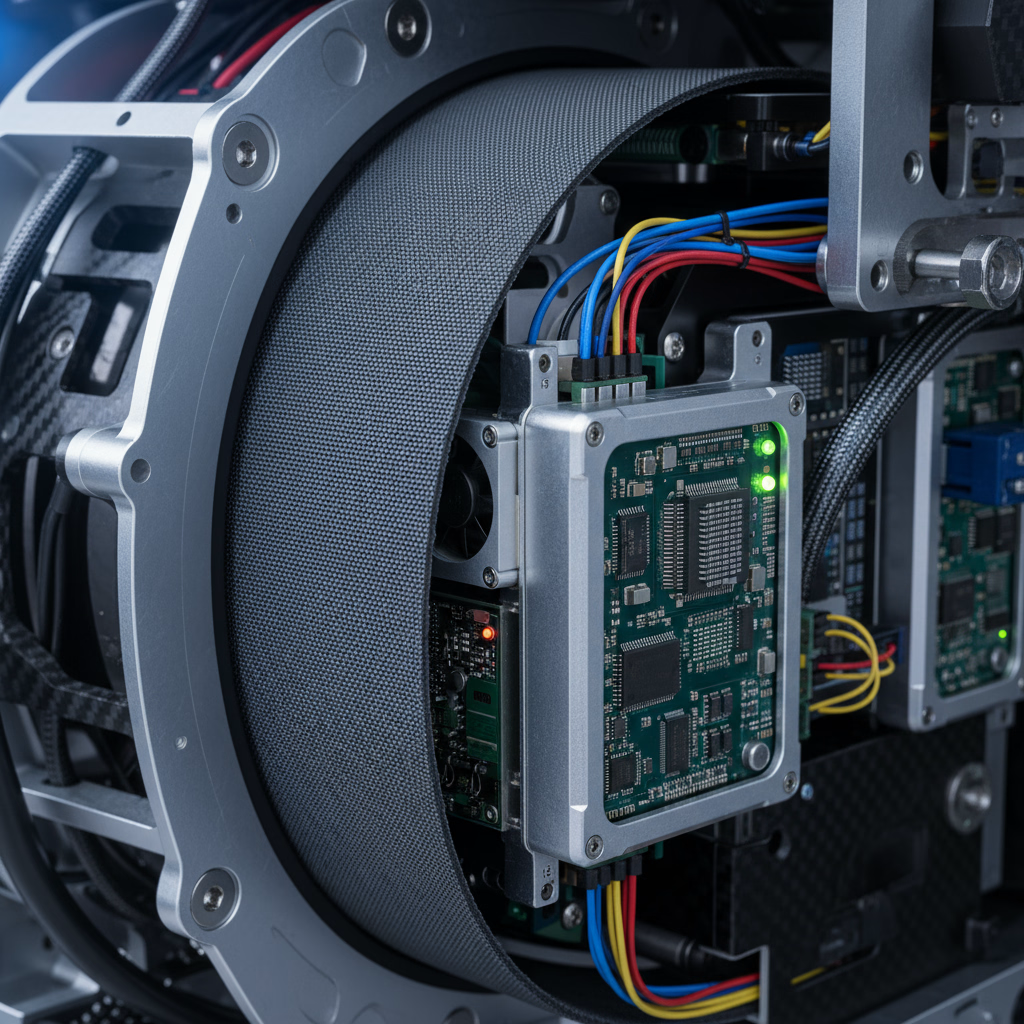
Here’s how RF absorbers contribute to modern robotics:
1. Reducing Internal Electromagnetic Interference
Robots are dense with electronic components: motor controllers, vision systems, LiDAR, radar, CPUs, GPUs, and wireless modules all packed into a single housing. These components can generate internal electromagnetic interference (EMI), especially in high speed or high power circuits.
Solution: RF absorbers, placed strategically near power supplies, antennae, or signal processors, suppress unwanted emissions and reduce coupling between subsystems, ensuring smoother internal communication.
2. Improving Sensor Accuracy
Robots use sensors like proximity detectors, cameras, and radar systems to interact with their environment. However, nearby RF noise can degrade sensor data, leading to poor navigation, obstacle avoidance errors, or reduced precision in industrial robots.
Solution: RF absorber sheets or coatings can be used to shield sensors or dampen reflective surfaces inside the robot’s housing to ensure cleaner data acquisition.
3. Enabling Reliable Wireless Communication
Robots often communicate wirelessly for coordination with other robots, control systems, or cloud platforms. WiFi, Bluetooth, 5G, and proprietary RF links are common, especially in autonomous drones, delivery bots, and mobile service robots.
Challenge: Reflections and interference from nearby components or surfaces inside the robot’s chassis can distort wireless signals.
Solution: RF absorbers minimize multipath interference and isolate transmitting and receiving elements, leading to clearer signals and improved communication range and speed.

4. Electromagnetic Compatibility Compliance
Robots, like all electronic systems, must meet EMC standards to ensure they don’t interfere with nearby devices and vice versa. This is especially critical in shared environments like hospitals, factories, or airports.
Solution: RF absorbers help manufacturers meet EMC regulations (such as IEC 61000 or FCC Part 15) by reducing emissions and improving immunity to external RF noise.
5. Supporting Advanced Autonomy and AI
Modern robots use high-speed data processing and edge AI to make real-time decisions. These processes can be sensitive to RF noise, particularly in systems using FPGAs, GPUs, or advanced vision modules.
Solution: Integrating RF absorbers into circuit enclosures or around high speed signal lines helps maintain signal integrity, reducing errors and enhancing performance.
Common Use Cases in Robotics
- Industrial Robots – Absorbers used near motor drivers and feedback loops to maintain signal fidelity.
- Autonomous Vehicles & Drones – Minimize RF shadowing and improve antenna performance.
- Medical Robots – Shielding to avoid interference with patient-monitoring equipment.
- Consumer Robots – Ensure reliable wireless connectivity for smart home integration.
Conclusion
RF absorbers may not be visible in the final robot design, but their role is fundamental. By managing the invisible world of electromagnetic energy, they make robots more reliable, responsive, and intelligent. In a future where robotics is ubiquitous, RF absorbers are the quiet enablers of cleaner signals and smarter machines.
As robotics advances into nearly every aspect of industry and daily life, the need for robust and interference free operation is more important than ever. Behind the scenes, one unsung technology is helping keep robotic systems stable and efficient: Radio Frequency absorbers.
What Are RF Absorbers?
RF absorbers are materials designed to reduce electromagnetic radiation in the radio frequency spectrum. They work by absorbing unwanted electromagnetic energy and converting it into heat, which is safely dissipated. These materials prevent reflections, reduce interference, and improve electromagnetic compatibility (EMC) in complex electronic systems.
Why Do Robots Need RF Absorbers?
Robots rely on a network of sensors, processors, actuators, and wireless modules, all of which emit or receive electromagnetic signals. Without careful electromagnetic management, these components can interfere with each other, leading to reduced performance or even system failure. RF absorbers are crucial for preventing this.
Here’s how RF absorbers contribute to modern robotics:
1. Reducing Internal Electromagnetic Interference
Robots are dense with electronic components: motor controllers, vision systems, LiDAR, radar, CPUs, GPUs, and wireless modules all packed into a single housing. These components can generate internal electromagnetic interference (EMI), especially in high speed or high power circuits.
Solution: RF absorbers, placed strategically near power supplies, antennae, or signal processors, suppress unwanted emissions and reduce coupling between subsystems, ensuring smoother internal communication.
2. Improving Sensor Accuracy
Robots use sensors like proximity detectors, cameras, and radar systems to interact with their environment. However, nearby RF noise can degrade sensor data, leading to poor navigation, obstacle avoidance errors, or reduced precision in industrial robots.
Solution: RF absorber sheets or coatings can be used to shield sensors or dampen reflective surfaces inside the robot’s housing to ensure cleaner data acquisition.
3. Enabling Reliable Wireless Communication
Robots often communicate wirelessly for coordination with other robots, control systems, or cloud platforms. WiFi, Bluetooth, 5G, and proprietary RF links are common, especially in autonomous drones, delivery bots, and mobile service robots.
Challenge: Reflections and interference from nearby components or surfaces inside the robot’s chassis can distort wireless signals.
Solution: RF absorbers minimize multipath interference and isolate transmitting and receiving elements, leading to clearer signals and improved communication range and speed.
4. Electromagnetic Compatibility Compliance
Robots, like all electronic systems, must meet EMC standards to ensure they don’t interfere with nearby devices and vice versa. This is especially critical in shared environments like hospitals, factories, or airports.
Solution: RF absorbers help manufacturers meet EMC regulations (such as IEC 61000 or FCC Part 15) by reducing emissions and improving immunity to external RF noise.
5. Supporting Advanced Autonomy and AI
Modern robots use high-speed data processing and edge AI to make real-time decisions. These processes can be sensitive to RF noise, particularly in systems using FPGAs, GPUs, or advanced vision modules.
Solution: Integrating RF absorbers into circuit enclosures or around high speed signal lines helps maintain signal integrity, reducing errors and enhancing performance.
Common Use Cases in Robotics
- Industrial Robots – Absorbers used near motor drivers and feedback loops to maintain signal fidelity.
- Autonomous Vehicles & Drones – Minimize RF shadowing and improve antenna performance.
- Medical Robots – Shielding to avoid interference with patient-monitoring equipment.
- Weight and Thickness – Critical in aerospace, consumer, or mobile devices.
- Consumer Robots – Ensure reliable wireless connectivity for smart home integration.
Conclusion
RF absorbers may not be visible in the final robot design, but their role is fundamental. By managing the invisible world of electromagnetic energy, they make robots more reliable, responsive, and intelligent. In a future where robotics is ubiquitous, RF absorbers are the quiet enablers of cleaner signals and smarter machines.
As robotics advances into nearly every aspect of industry and daily life, the need for robust and interference free operation is more important than ever. Behind the scenes, one unsung technology is helping keep robotic systems stable and efficient: Radio Frequency absorbers.
What Are RF Absorbers?
RF absorbers are materials designed to reduce electromagnetic radiation in the radio frequency spectrum. They work by absorbing unwanted electromagnetic energy and converting it into heat, which is safely dissipated. These materials prevent reflections, reduce interference, and improve electromagnetic compatibility (EMC) in complex electronic systems.
Why Robots Need RF Absorbers
Robots rely on a network of sensors, processors, actuators, and wireless modules, all of which emit or receive electromagnetic signals. Without careful electromagnetic management, these components can interfere with each other, leading to reduced performance or even system failure. RF absorbers are crucial for preventing this.
Here’s how RF absorbers contribute to modern robotics:
1. Reducing Internal Electromagnetic Interference
Robots are dense with electronic components: motor controllers, vision systems, LiDAR, radar, CPUs, GPUs, and wireless modules all packed into a single housing. These components can generate internal electromagnetic interference (EMI), especially in high speed or high power circuits.
Solution: RF absorbers, placed strategically near power supplies, antennae, or signal processors, suppress unwanted emissions and reduce coupling between subsystems, ensuring smoother internal communication.
2. Improving Sensor Accuracy
Robots use sensors like proximity detectors, cameras, and radar systems to interact with their environment. However, nearby RF noise can degrade sensor data, leading to poor navigation, obstacle avoidance errors, or reduced precision in industrial robots.
Solution: RF absorber sheets or coatings can be used to shield sensors or dampen reflective surfaces inside the robot’s housing to ensure cleaner data acquisition.
3. Enabling Reliable Wireless Communication
Robots often communicate wirelessly for coordination with other robots, control systems, or cloud platforms. WiFi, Bluetooth, 5G, and proprietary RF links are common, especially in autonomous drones, delivery bots, and mobile service robots.
Challenge: Reflections and interference from nearby components or surfaces inside the robot’s chassis can distort wireless signals.
Solution: RF absorbers minimize multipath interference and isolate transmitting and receiving elements, leading to clearer signals and improved communication range and speed.
4. Electromagnetic Compatibility Compliance
Robots, like all electronic systems, must meet EMC standards to ensure they don’t interfere with nearby devices and vice versa. This is especially critical in shared environments like hospitals, factories, or airports.
Solution: RF absorbers help manufacturers meet EMC regulations (such as IEC 61000 or FCC Part 15) by reducing emissions and improving immunity to external RF noise.
5. Supporting Advanced Autonomy and AI
Modern robots use high-speed data processing and edge AI to make real-time decisions. These processes can be sensitive to RF noise, particularly in systems using FPGAs, GPUs, or advanced vision modules.
Solution: Integrating RF absorbers into circuit enclosures or around high speed signal lines helps maintain signal integrity, reducing errors and enhancing performance.
Common Use Cases in Robotics
- Industrial Robots – Absorbers used near motor drivers and feedback loops to maintain signal fidelity.
- Autonomous Vehicles & Drones – Minimize RF shadowing and improve antenna performance.
- Medical Robots – Shielding to avoid interference with patient-monitoring equipment.
- Consumer Robots – Ensure reliable wireless connectivity for smart home integration.
Conclusion
RF absorbers may not be visible in the final robot design, but their role is fundamental. By managing the invisible world of electromagnetic energy, they make robots more reliable, responsive, and intelligent. In a future where robotics is ubiquitous, RF absorbers are the quiet enablers of cleaner signals and smarter machines.
As robotics advances into nearly every aspect of industry and daily life, the need for robust and interference free operation is more important than ever. Behind the scenes, one unsung technology is helping keep robotic systems stable and efficient: Radio Frequency absorbers.
What Are RF Absorbers?
RF absorbers are materials designed to reduce electromagnetic radiation in the radio frequency spectrum. They work by absorbing unwanted electromagnetic energy and converting it into heat, which is safely dissipated. These materials prevent reflections, reduce interference, and improve electromagnetic compatibility (EMC) in complex electronic systems.
Why Do Robots Need RF Absorbers?
Robots rely on a network of sensors, processors, actuators, and wireless modules, all of which emit or receive electromagnetic signals. Without careful electromagnetic management, these components can interfere with each other, leading to reduced performance or even system failure. RF absorbers are crucial for preventing this.
Here’s how RF absorbers contribute to modern robotics:
1. Reducing Internal Electromagnetic Interference
Robots are dense with electronic components: motor controllers, vision systems, LiDAR, radar, CPUs, GPUs, and wireless modules all packed into a single housing. These components can generate internal electromagnetic interference (EMI), especially in high speed or high power circuits.
Solution: RF absorbers, placed strategically near power supplies, antennae, or signal processors, suppress unwanted emissions and reduce coupling between subsystems, ensuring smoother internal communication.
2. Improving Sensor Accuracy
Robots use sensors like proximity detectors, cameras, and radar systems to interact with their environment. However, nearby RF noise can degrade sensor data, leading to poor navigation, obstacle avoidance errors, or reduced precision in industrial robots.
Solution: RF absorber sheets or coatings can be used to shield sensors or dampen reflective surfaces inside the robot’s housing to ensure cleaner data acquisition.
3. Enabling Reliable Wireless Communication
Robots often communicate wirelessly for coordination with other robots, control systems, or cloud platforms. WiFi, Bluetooth, 5G, and proprietary RF links are common, especially in autonomous drones, delivery bots, and mobile service robots.
Challenge: Reflections and interference from nearby components or surfaces inside the robot’s chassis can distort wireless signals.
Solution: RF absorbers minimize multipath interference and isolate transmitting and receiving elements, leading to clearer signals and improved communication range and speed.
4. Electromagnetic Compatibility Compliance
Robots, like all electronic systems, must meet EMC standards to ensure they don’t interfere with nearby devices and vice versa. This is especially critical in shared environments like hospitals, factories, or airports.
Solution: RF absorbers help manufacturers meet EMC regulations (such as IEC 61000 or FCC Part 15) by reducing emissions and improving immunity to external RF noise.
5. Supporting Advanced Autonomy and AI
Modern robots use high-speed data processing and edge AI to make real-time decisions. These processes can be sensitive to RF noise, particularly in systems using FPGAs, GPUs, or advanced vision modules.
Solution: Integrating RF absorbers into circuit enclosures or around high speed signal lines helps maintain signal integrity, reducing errors and enhancing performance.
Common Use Cases in Robotics
- Industrial Robots – Absorbers used near motor drivers and feedback loops to maintain signal fidelity.
- Autonomous Vehicles & Drones – Minimize RF shadowing and improve antenna performance.
- Medical Robots – Shielding to avoid interference with patient-monitoring equipment.
- Weight and Thickness – Critical in aerospace, consumer, or mobile devices.
- Consumer Robots – Ensure reliable wireless connectivity for smart home integration.
Conclusion
RF absorbers may not be visible in the final robot design, but their role is fundamental. By managing the invisible world of electromagnetic energy, they make robots more reliable, responsive, and intelligent. In a future where robotics is ubiquitous, RF absorbers are the quiet enablers of cleaner signals and smarter machines.
